
Finnegans Wake can, if that is possible, be experienced by a reader as even more difficult than Ulysses. Those who have set out to try to get through Joyce’s last great work alone or, better yet, with others, will find that it can sometimes be both difficult and frustrating, but also very enjoyable and rewarding. Ulysses depicts a day in the life of some Dubliners. Finnegans Wake is sometimes said to depict the night and its dreams. However, it is not realistic dreams or even surreal ones. There are dreams of mythology, history, language and psychology. What you will see when you start reading Finnegans Wake is probably none of this, at least not to begin with. Instead, you may be struck by the fact that this is a special form of humor; puns, irony and generally a play with the sounds and connotations of words.
That would seem as if Finnegans Wake is poetry and it both is and is not. Sometimes it is truly beautiful and sometimes, You have to admit, it is tiring. One way to approach Finnegans Wake is to listen to it. If you want to listen to someone reading it is available to listen to an audiobook from publishers like Storytel and Naxos, and a reading by Patrick Horgan:

If the Patrick Horgan reading page takes to long to load, try Patrick Healys reading on UbuWeb Sound instead.
Supplementary reading
When you read Finnegans Wake , and for that matter Ulysses , it is almost inevitable that you use various supplementary readings. Without intending to intimidate, I can say that there is an almost infinite amount of text (and perhaps music, art, etc.) that you will meet when reading. For me that is part of the fun. Below I will list three books that I have used. Two are solely about Finnegans Wake and one is a kind of encyclopedia of Joyce’s life and works.
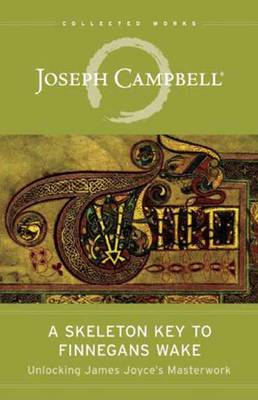
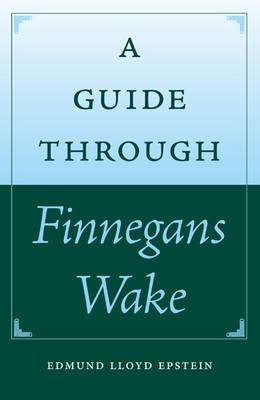
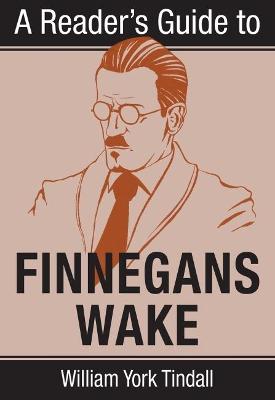
Joseph Campbell’s A Skeleton Key to Finnegans Wake has been published in many editions since it was first published in 1944, just five years after Finnegans Wake itself.1 The subtitle is Unlocking James Joyce’s Masterwork. It is, along with Tindall’s A Reader’s Guide to Finnegans Wake, one of the standard works. More recent is Epstein’s A Guide Through Finnegans Wake.2
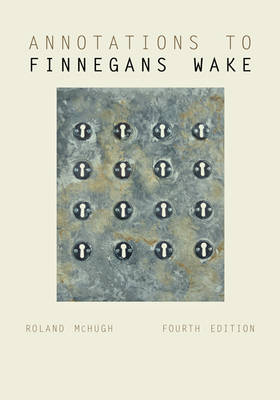
Of a slightly different nature is McHugh’s Annotations to Finnegans Wake.3 It is a page by page notation of what the strange words might mean and where they come from, all those mysterious words and phrases that the pages of Finnegans Wake are teeming with. It is possible to follow these annotations quite easily, because all Finnegans Wake editions follow the same pagination and the same line breaks. A tip for a good aid if you intend to use these Annotations is to create a strip of paper with 36 line numbers that correspond to the line spacing in your edition of Finnegans Wake.
In this way you can immediately see that the reference 137:09 can refer to the sentence ”built the Lund’s
kirk and destroyed the churche’s land”. For those who are not from Lund or have visited Lund’s cathedral, the explanation in the Annotations comes: ”Lund Cathedral in Sweden was built by Finn, a giant, for Laurentius, a holy man, who agreed to forfeit his eyes in payment, but was absolved when he discovered the giant’s name”,
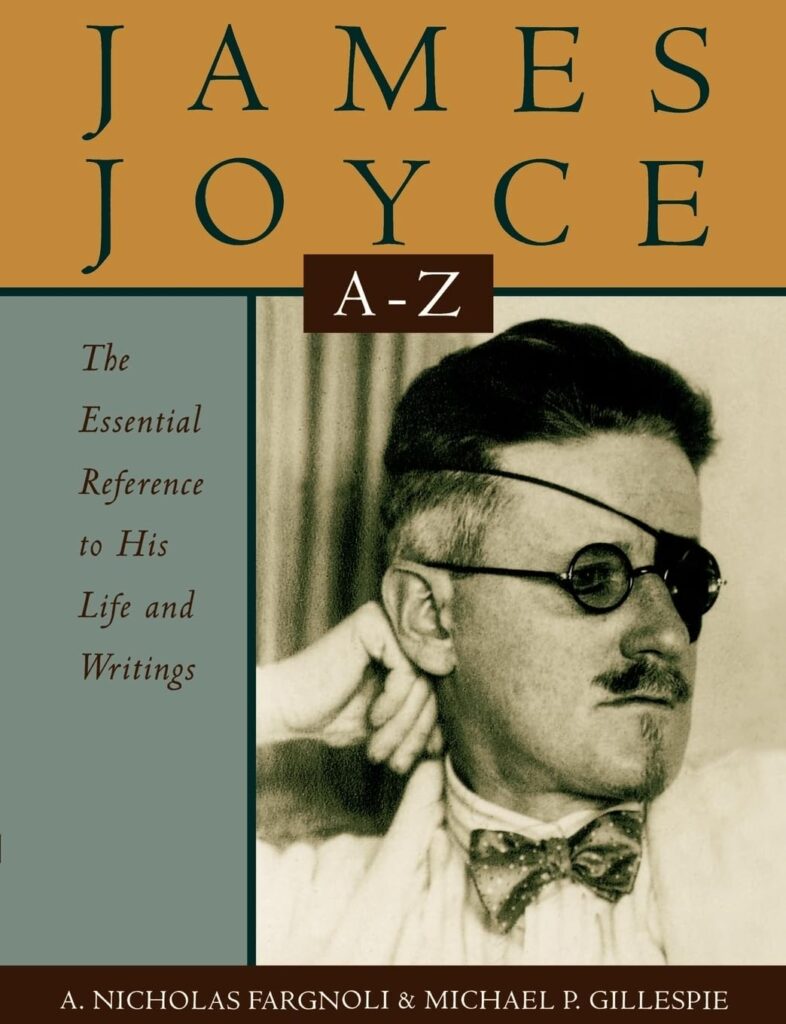
I can also recommend the “dictionary” of James Joyce’s life and works that I mentioned above: James Joyce A to Z by Fargnoli & Gillespie.4 It covers a lot of things besides Finnegans Wake, but the article on Finnegans Wake takes up 14 pages and is quite useful.
- Campbell, Joseph, Robinson, Henry Morton, Campbell, Joseph & Epstein, Edmund L. (2013), A skeleton key to Finnegans Wake: unlocking James Joyce’s masterwork. Collected works of Joseph Campbell. Novato, California: New World Library.
↩︎ - Tindall, William York (1996), A reader’s guide to Finnegans wake. Irish studies, 99-0654491-0. Syracuse, NY: Syracuse University Press.; Epstein, Edmund L. (2009), A guide through Finnegans wake. Gainesville: University Press of Florida.
↩︎ - McHugh, Roland & Joyce, James (2016), Annotations to Finnegans wake. Baltimore: Johns Hopkins University Press.
↩︎ - Fargnoli, A. Nicholas & Gillespie, Michael Patrick (1996), James Joyce A to Z: the essential reference to the life and work. New York: Oxford University Press.
↩︎